HEALTHY FUNGI / Pure mushroom extracts
FRUITING BODY EXTRACT · HEALTHY FUNGI

Lion’s Mane extract

Hericium erinaceus · lion’s mane · pom-pom

Product specificationsAt least 50% polysaccharides · at least 20% beta-glucans

The distinctive white Lion’s Mane mushroom is known for its fine, hanging spines and long culinary tradition. Healthy Fungi uses the fruiting body to make a concentrated extract in plant-based capsules.

60 capsules · 300–350 mg extract per capsule
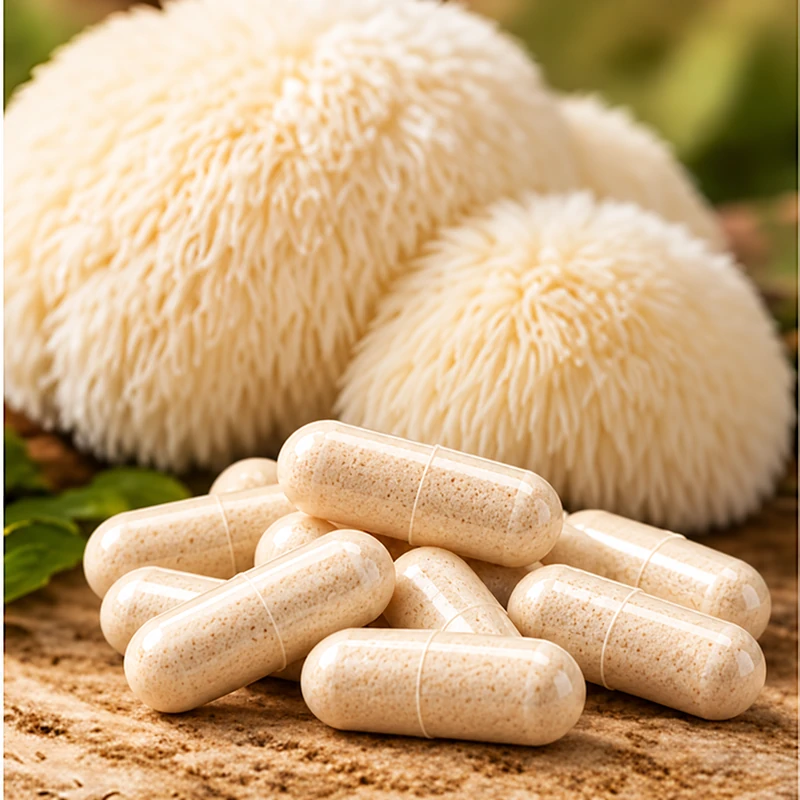
Illustrative presentation of Lion’s Mane extract powder
02 / DETAILED PRODUCT INFORMATION

From the white lion’s mane mushroom to a concentrated extract

Lion’s Mane is an edible wood-growing mushroom that has long been part of Asian cuisine. This striking fungus also features in local stories and traditional preparations in the Russian Far East. For our extracts, we focus on the identity of the species, the fruiting body used and measurable composition.

Part of mushroom usedFruiting body
StandardizationAt least 50% polysaccharides
Separate fractionAt least 20% beta-glucans
01

Origin and identification

Hericium erinaceus grows on living or dead deciduous trees in temperate parts of Europe, Asia and North America. The fruiting body usually forms a single white to ivory mass with soft, downward-pointing spines; it resembles a white hedgehog, a lion’s mane or a pom-pom.

The mushroom belongs to the Hericiaceae family and is also known as bearded tooth fungus, yamabushitake and houtougu. Unlike a typical cap mushroom, it does not form a stalk with separate gills.
02

Cuisine and tradition

In China, Japan and other parts of East Asia, the fruiting body is prepared in stocks, soups and hot dishes. Thanks to its soft texture, Lion’s Mane is also known as the pom-pom mushroom or noodle mushroom.

In stories from the Russian Far East, the species appears under the name 'white hedgehog'. Local traditions mention boiling, drying and preparing infusions. The nickname 'conqueror of time' belongs to longevity folklore, not to a demonstrated effect of a food supplement.

03

The stories from Khabarovsk

Regional traditions around Khabarovsk include preparations of Lion’s Mane as infusions and alcoholic tinctures. Stories also place such preparations in the wartime years, when local residents and caregivers used forest materials available to them.

The account that Lion’s Mane was used at that time to wash or treat wounds describes a historical practice, not a proven or recommended wound treatment. No specific archival reference or medical record from Khabarovsk confirming this use has been established.

04

Cultivation and raw materials

Our Lion’s Mane is grown on a substrate of sawdust, organic wheat bran, cane sugar and natural gypsum. The substrate supports growth; only the resulting fruiting body is used for the extract, not ground cultivation substrate or mycelium powder.

The extract's properties depend on the raw material, extraction process and chemical analysis of the final batch. Standardized percentages are therefore more useful than general claims of 'powerful' or 'superior' effects.

05

The natural compound profile

The fruiting body contains carbohydrate fractions such as polysaccharides and beta-glucans, alongside proteins, amino acids, dietary fiber, sterols and minerals. Also described are hericenones described in scientific literature as characteristic compounds from the fruiting body.

Erinacines are another group of compounds studied mainly in mycelium cultures. A positive research finding with erinacine-rich mycelium therefore does not prove that a fruiting-body extract contains the same substances or produces the same effects.

06

Extraction and standardization

During processing into an extract, certain components are released from the fruiting body and concentrated. Hot water is particularly suitable for extracting water-soluble fractions, including various polysaccharides. Which particular compounds remain depends on the entire preparation process.

Our Lion’s Mane extract is specified to contain at least 50% total polysaccharides and at least 20% beta-glucans. These are different measurements; they must not be added together as though they were independent, non-overlapping components.

What do the percentages per capsule mean?

Based on the minimum specification, a 300–350 mg capsule mathematically contains 150–175 mg of constituents measured as polysaccharides and at least 60–70 mg of beta-glucans. These fractions may overlap. No separate standardization is specified for hericenones or erinacines, so we make no claims about their content or effects.

03 / PREPARATION AND USE

The capsules and culinary preparation

Fruiting body extract in pullulan capsules

Our capsules contain concentrated Lion’s Mane fruiting-body extract. The plant-based capsule shell is made from pullulan produced through fermentation. No fillers, ground grain or mycelium powder are added to the contents.

The formulation contains no added caffeine, ephedrine, soy, lactose, sugar, preservatives, or synthetic fragrances, colors or flavorings. If you have an allergy or intolerance, refer to the current ingredient and allergen information on the label.

Contents60 capsules
Extract per capsule300–350 mg
Extract per jar18–21 grams
Capsule shellPlant-based pullulan

Directions for use

Daily use: 2–3 capsules per day.

Personal usage schedule: 4–6 capsules per day, optionally combined with other recommended mushrooms.

Take with a glass of water on an empty stomach.

  • 30 minutes before or approximately 90 minutes after a meal.
  • Acerola is a natural source of vitamin C. Increasing the dosage of vitamin C while taking mushrooms is recommended to enhance their effects. Natural vitamin C helps the body absorb important substances more effectively. View the description and product information.
  • Would you like to enhance the effects of mushrooms? In that case, I recommend Chaga infusion to drink. Prepare the infusion with water at 70–80 °C and let it steep according to the historical recipe. View the full recipe in the description.
  • When combining mushrooms, use no more than three or four species.
  • For sustained results, use the same mushroom for at least two to three months.
  • If you take medication, always consult your doctor or pharmacist.

Storage: keep out of reach of children, dry and dark at 10–25 °C, in the tightly closed package.

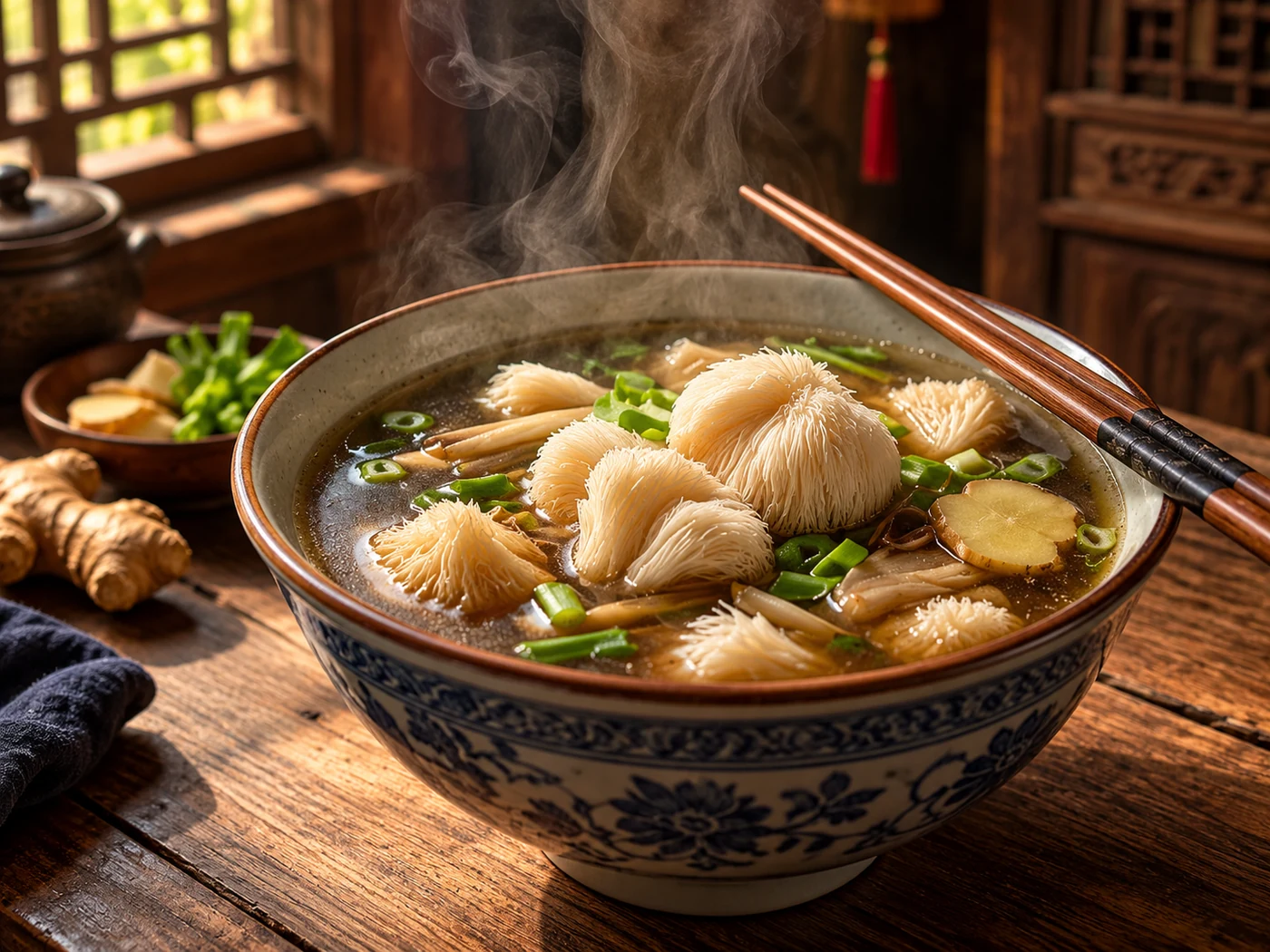
Warm Pom-Pom soup with edible Lion’s Mane, ginger and spring onion
Traditional cuisine

Pom-Pom soup with Lion’s Mane

A warm dish featuring the edible mushroom as the main ingredient. Use fresh or food-grade dried Lion’s Mane, not the extract capsules.

Serves two: 150–200 g fresh Lion’s Mane (or an appropriate quantity of fully rehydrated dried mushroom), 750 ml vegetable stock, 2 slices of ginger, 1 spring onion and, optionally, a dash of soy sauce.

  1. Clean the mushroom and cut or tear the fruiting body into bite-sized pieces. Soak dried mushrooms according to the instructions and then heat them thoroughly.
  2. Bring the broth and ginger to a boil and add the Lion’s Mane.
  3. Cook gently for about 15–20 minutes, depending on the size of the pieces.
  4. Finish with finely chopped spring onion and season to taste with soy sauce. Serve warm.
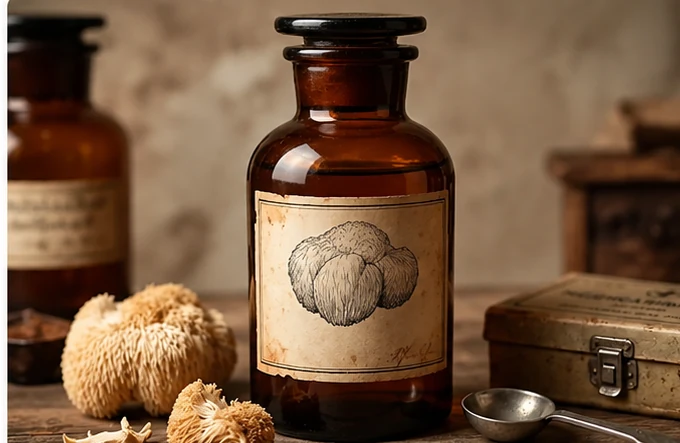
Illustrative historical apothecary scene with an amber bottle and Lion’s Mane
Historical preparations

Infusions and tinctures around Khabarovsk

Russian stories from the Khabarovsk region mention water infusions and alcoholic tinctures of the white Lion’s Mane mushroom in addition to soups and broths. Accounts describe external use during difficult times, including wartime years.

A traditional recipe uses one part fully dried, finely chopped mushroom to five parts alcohol at approximately 40–45%. The mixture was covered and kept in the dark for four to six weeks, shaken regularly and then strained. This describes a historical preparation method, not an approved medicine or a proven skin treatment.

Do not use homemade mushroom tinctures on open, infected or suppurating wounds. Seek medical advice for skin conditions or wound problems.

04 / COMPOSITION AND RESEARCH

Lion’s Mane in scientific research

Alongside Lion’s Mane's rich culinary tradition, there is scientific interest in the various substances found in the fruiting body and mycelium. To interpret findings correctly, we always consider the raw material used, the measurement method and the type of research.

Hericenones and nerve growth factor

Hericenones from the fruiting body have been studied experimentally for their possible influence on cellular signaling pathways associated with nerve growth factor (NGF). A laboratory response is not evidence that taking this extract repairs nerve cells in humans.

Erinacines from mycelium

Erinacines have mainly been studied in certain mycelium cultures. Their concentration cannot be inferred from the polysaccharide or beta-glucan content of our fruiting-body extract. Findings from mycelium studies are therefore not directly interchangeable with those for this product.

Human studies

Small clinical studies have examined various Lion’s Mane preparations. Product forms, participants, outcome measures and study durations differ. The current findings are insufficient to attribute proven effects on memory, mood, dementia or nerve repair to our extract.

Polysaccharides and beta-glucans

Polysaccharides and beta-glucans are an important part of mushroom extract analysis. They can be measured chemically, but a high content is not in itself evidence of a specific biological or therapeutic effect in humans.

05 / PRODUCT

Order Lion’s Mane extract

View all extracts
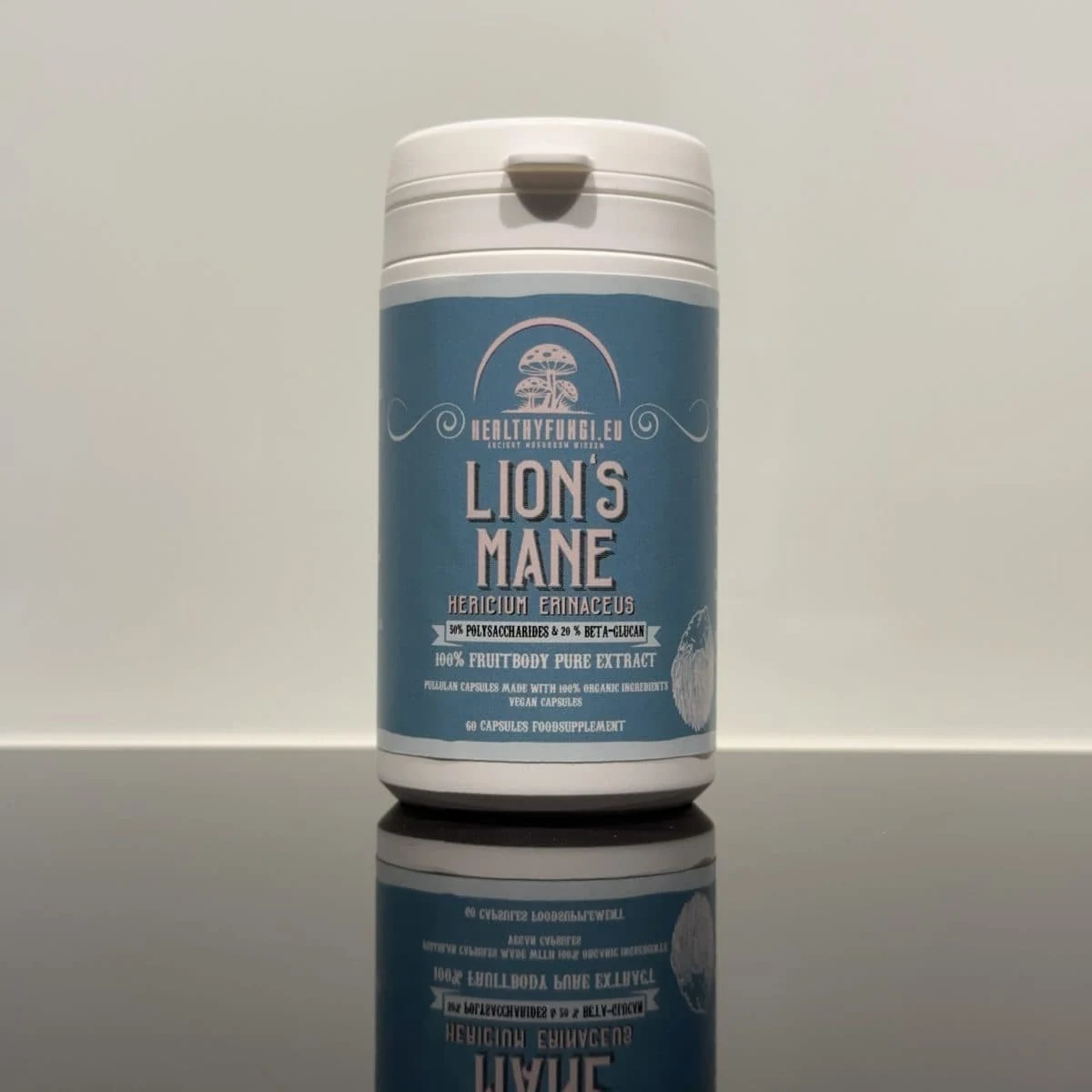
Healthy Fungi Lion’s Mane extract in its original packaging
HEALTHY FUNGI · FRUITING BODY EXTRACT

Lion’s Mane 50% en 20% bètaglucanen, Hericium erinaceum

Our Lion’s Mane extract is standardized to at least 50% total polysaccharides and at least 20% beta-glucans. Each jar contains 60 plant-based capsules with 300–350 mg of fruiting-body extract per capsule.