HEALTHY FUNGI / Pure mushroom extracts
CORDYCEPS · HEALTHY FUNGI

Cordyceps extract

Ophiocordyceps sinensis · synonym Cordyceps sinensis

Product specifications At least 50% polysaccharides · at least 20% beta-glucans

Cordyceps has a long history in the Himalayan region. For our extract, the origin of the culture, exact species, composition and analysis of the finished preparation are the most important quality characteristics.

60 capsules · 300–350 mg extract per capsule
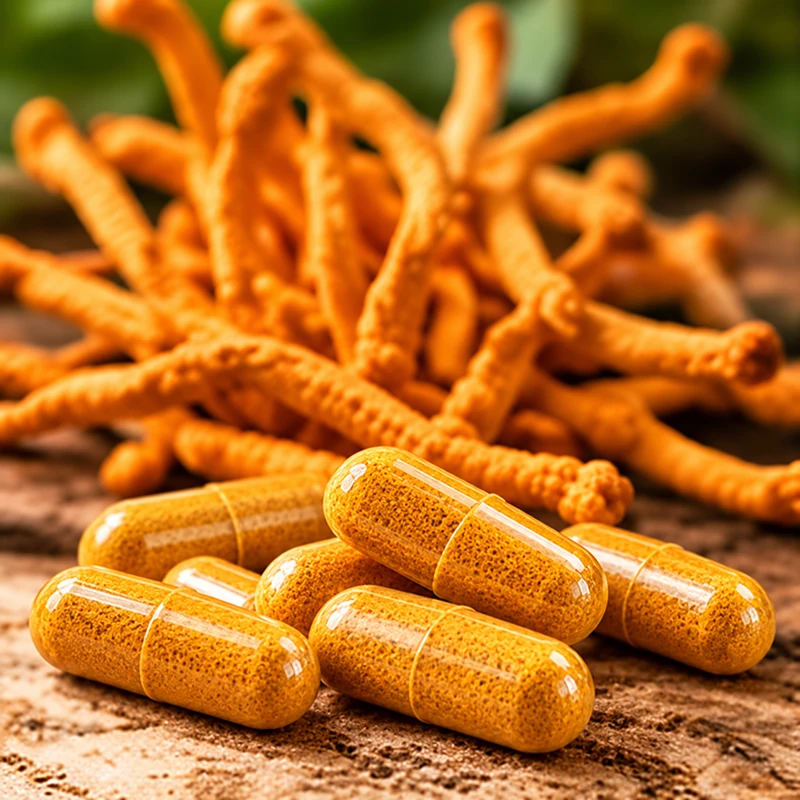
Cordyceps extract powder in a glass bowl, illustrative image
02 / DETAILED PRODUCT INFORMATION

Cordyceps: origin, raw material and extraction

Cordyceps is a collective name used commercially for various fungi and cultivated materials. Healthy Fungi therefore distinguishes between the name on the label and the actual species identity and composition of the extract.

Raw materialCultivated Cordyceps culture
Standardization50% total polysaccharides
Beta-glucansAt least 20% · measured separately
01

Herders and the mountain tradition

In Tibetan stories, Cordyceps is known as the unusual 'winter worm, summer grass'. Herders saw slender dark-brown fruiting bodies among the tall grass and found the remains of caterpillars beneath them. Later accounts linked this discovery with yak and sheep herders.

The legend illustrates the historical significance of the fungus. Stories about animals becoming stronger as a result are not scientific evidence of effects in humans.
02

Natural habitat

Ophiocordyceps sinensis occurs in the high mountains of the Tibetan Plateau and parts of the Himalayas. The fungus parasitizes larvae of moths that live underground. When the fruiting body develops, a single dark stalk emerges above the ground.

Wild specimens grow at high altitudes and are scarce. Commercial ingredients used in supplements therefore often come from controlled fungal cultures and are not necessarily equivalent to a wild-harvested caterpillar–fungus complex.

03

Cultivation and materials used

Production uses a controlled fungal culture grown on a nutrient medium containing rice and protein constituents, among other ingredients. Both mycelium and fungal structures are involved in processing this Cordyceps preparation.

That is an essential difference from an extract prepared exclusively from wild, mature fruiting bodies. Substrate residues and possible allergens must also be assessed in the product specification; the exact biological species must be independently verified.

04

Which compounds are being studied?

In Cordyceps materials, researchers investigate various polysaccharides and glucans, nucleosides such as adenosine, proteins, amino acids and sterol-like compounds. Exact concentrations vary greatly between species, cultivated strains and extraction methods.

The compound cordycepin is extensively studied in relation to Cordyceps militaris; such results and concentrations cannot simply be attributed to O. sinensis or attributed to our own extract. Analysis of the finished product is necessary to determine an actual concentration.

05

The distinction between polysaccharides and beta-glucans

The product is standardized to at least 50% polysaccharides and at least 20% beta-glucans. Beta-glucans are a subgroup of polysaccharides: the percentages are therefore not added together.

Measurements of total polysaccharides depend on the analytical method. To assess quality, we also check the actual beta-glucan content and the possible presence of starch from the cultivation substrate.

06

Extraction, identification and quality

Hot-water extraction is a common method for obtaining mainly water-soluble polysaccharide fractions from fungal material. Concentration and drying produce a stable extract powder. Different extraction techniques do not release all groups of compounds equally well.

Quality control requires identification of the culture strain, the part of the culture used, drying and extraction methods, microorganisms, heavy metals and batch analyses. A percentage on a label is not proof of therapeutic efficacy.

03 / PREPARATION AND USE

The extract in plant-based capsules

Composition per package

Our Cordyceps extract comes in a jar of 60 plant-based pullulan capsules. Each capsule contains 300–350 mg of extract. The total extract content per package is therefore approximately 18–21 grams.

The capsule shell consists of pullulan. The presence or absence of specific allergens and culture-medium residues must be confirmed using the current label and batch data.

Packaging60 capsules
Per capsule300–350 mg extract
Total polysaccharidesAt least 50%
Beta-glucansAt least 20%

Use and storage

Daily use: 2–3 capsules per day.

Personal usage schedule: 4–6 capsules per day, optionally combined with other recommended mushrooms.

Take with a glass of water on an empty stomach.

  • 30 minutes before or approximately 90 minutes after a meal.
  • Acerola is a natural source of vitamin C. Increasing the dosage of vitamin C while taking mushrooms is recommended to enhance their effect. Natural vitamin C helps the body absorb important substances more effectively. View the description and product information.
  • Would you like to enhance the effects of mushrooms? In that case, I recommend Chaga infusion to drink. Prepare the infusion with water at 70–80 °C and let it steep according to the historical recipe. View the full recipe in the description.
  • When combining mushrooms, use no more than three or four species.
  • For sustained results, use the same mushroom for at least two to three months.
  • If you take medication, always consult your doctor or pharmacist.

Storage: keep out of reach of children, dry and dark at 10–25 °C, in the tightly closed package.

The name Cordyceps does not tell you everything about the product

With supplements, it is essential to know which fungus was actually cultivated. Ophiocordyceps sinensis, Cordyceps militaris and separately commercially cultivated mycelium strains are not automatically interchangeable. Given the differences in identity and European authorization rules, the correct species name and batch-specific composition should take priority.

04 / SCIENCE AND SAFETY

Biological compounds and current state of research

Cordyceps is the subject of chemical, pharmacological and clinical research. Results depend on the species studied and the actual extract used. Experimental effects or traditional applications are not equivalent to proven health benefits of our preparation.

Polysaccharides and cellular processes

Certain polysaccharides and glucans are investigated for interactions with immune cells and signaling pathways. This research is largely carried out in cell and animal models. Such findings do not justify a claim that this product strengthens the immune system.

Nucleosides and metabolism

Nucleosides such as adenosine are part of chemical research into Cordyceps. Their presence in a fungus does not mean that a capsule has a clinically established effect on energy, oxygen uptake or metabolism.

Performance and endurance

There are small and varied human studies on Cordyceps preparations and athletic performance. They concern different species, blends and dosages. They do not provide a basis for promising improved energy or endurance from our specific extract.

European species classification

Cordyceps militaris is an unauthorized novel food in the EU and may not be sold as a food supplement. Ophiocordyceps sinensis is classified differently for use in supplements in the EU Novel Food Catalogue. This applies only when the actual ingredient meets the relevant identity and conditions.

05 / PRODUCT

Cordyceps extract

View all extracts
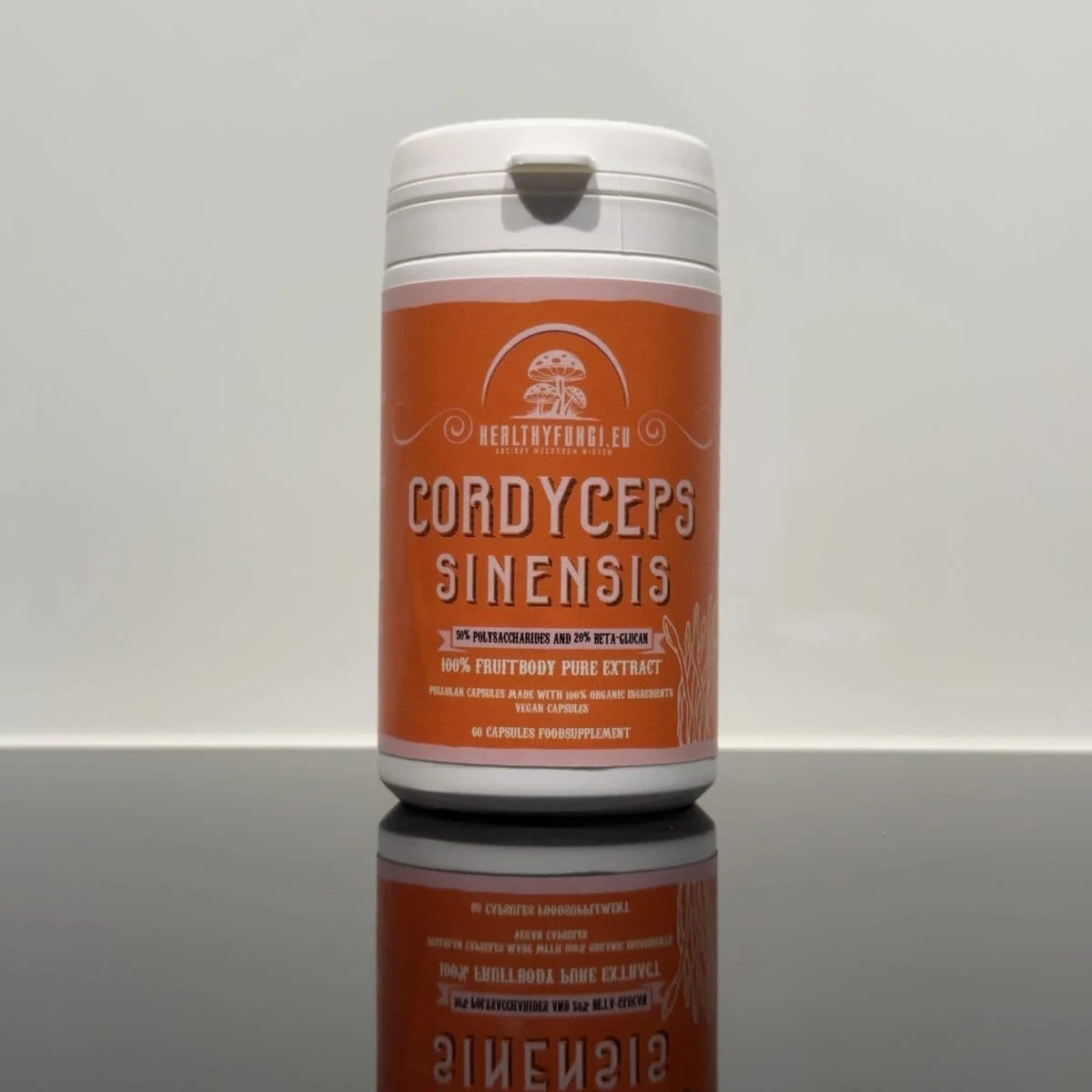
Healthy Fungi Cordyceps extract in its original product packaging
HEALTHY FUNGI · CORDYCEPS EXTRACT

Cordyceps 50% en 20% bètaglucanen, Cordyceps sinensis

Cordyceps extract with at least 50% polysaccharides and 20% beta-glucans. Jar with 60 plant-based capsules, each containing 300–350 mg of extract.