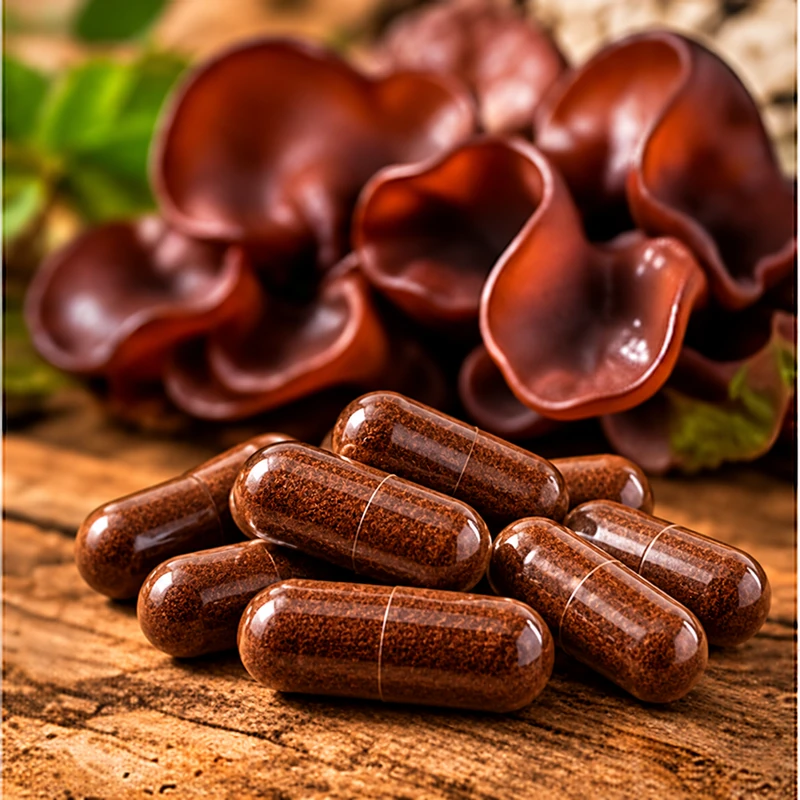
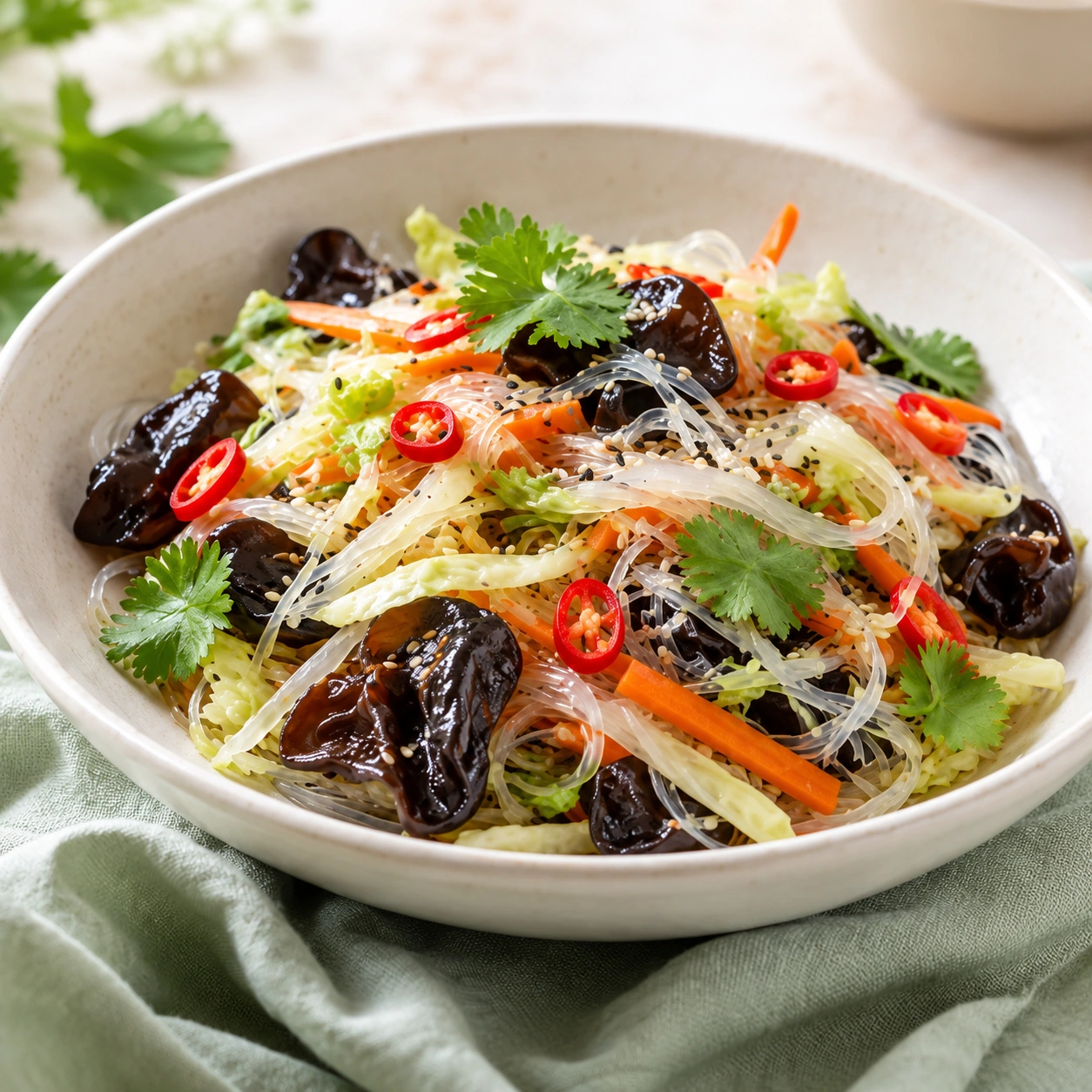
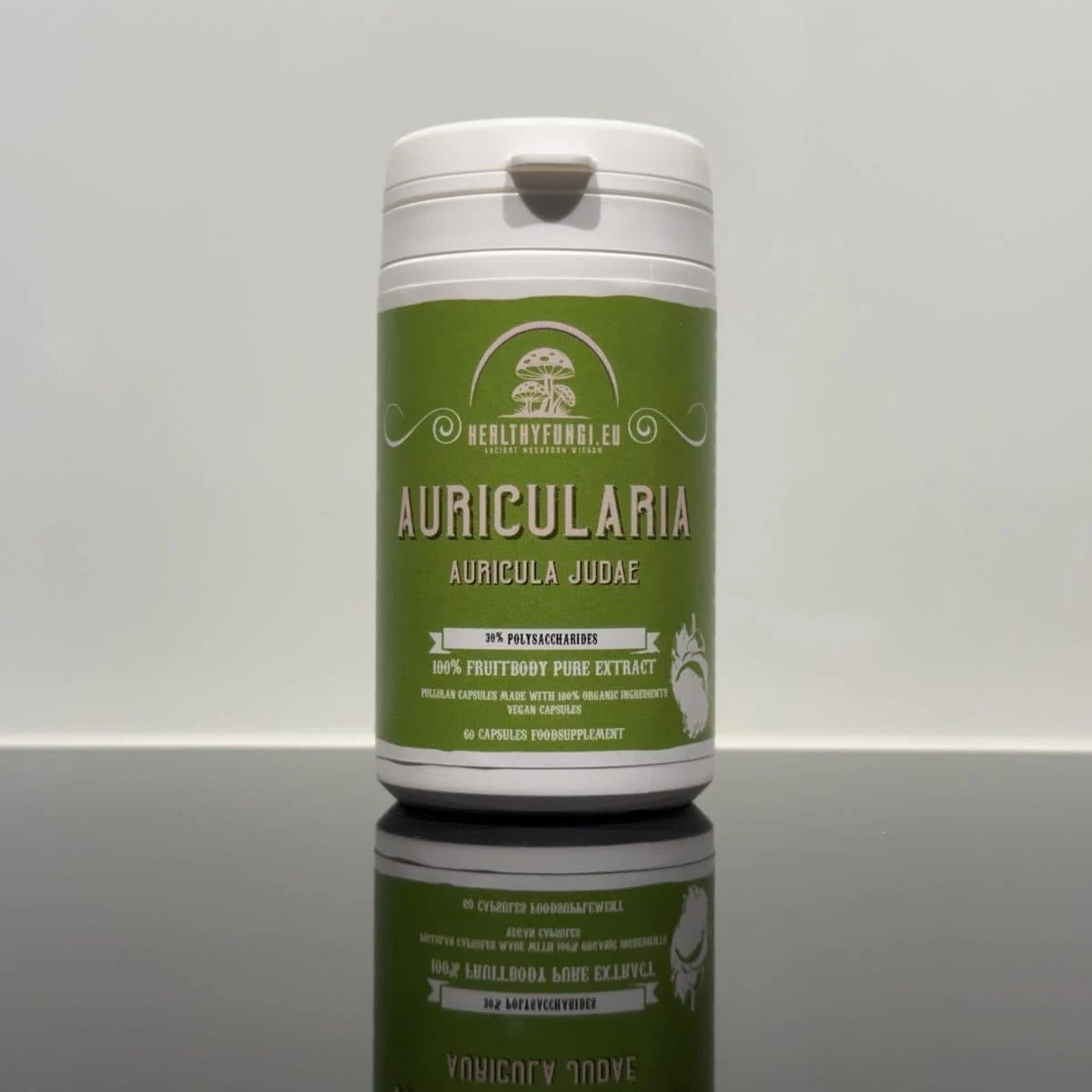
Auricularia is known for its flexible, ear-shaped fruiting bodies and its remarkable structure, which can absorb water again after drying. Besides its place in Asian cuisine, this mushroom has a long history in traditional preparations. For our extract, the origin, the fruiting body used and the carefully selected extraction method are particularly important.
Raw materialFruiting body, without added mycelium powder
ProcessingFermentation and hot-water extraction
StandardizationAt least 30% polysaccharides
01
A recognizable species
The soft, cartilage-like fruiting bodies attach to hardwood and have a distinctive ear shape. When young, they resemble small saucers; when mature, they form folded brown to dark-brown ears. Dried specimens shrink considerably and become dark, thin and firm. After soaking in water, they regain their flexible structure.
The name Jelly ear refers to that characteristic shape. Auricularia grows on dead or weakened wood, including elder and other deciduous trees. It is a familiar edible wood ear species, but a culinary fruiting body and a standardized extract are not the same product.
02
Tradition and history
Wood ear mushrooms have been used in East Asian dishes for many centuries, including soups, salads and hot noodle dishes. Their soft, slightly crunchy texture and good keeping qualities after drying made them suitable for storage and transport. Traditional uses have also been described in European and Russian folk practices.
A woodland tale tells of a wood ear listening to rain, wind and rustling leaves. This story gives the mushroom its own place in folklore; it is not an explanation of any bodily effect.
03
Cultivation and raw materials
We use the fruiting body for our Auricularia extract. The mushrooms are cultivated on a blended substrate containing sawdust, wheat bran, cane sugar and natural gypsum. The substrate is the growing medium and is not added to the capsule as a filler.
Accuracy is important when identifying wood ear mushrooms. Several Asian Auriculariaspecies, including A. heimuer, have historically been traded under similar names. Species identity must therefore be confirmed using current raw-material documentation; a photograph alone is insufficient.
04
What does the mushroom contain?
The whole fruiting body contains polysaccharides, various glucan fractions, dietary fiber, chitin-like cell-wall components, proteins, amino acids, sterols and minerals, among other constituents. Their proportions vary by species, origin, growing medium and stage of development.
Research also examines specific Auricularia polysaccharides. Some consist of complex carbohydrate chains containing several sugar units. Which compounds ultimately occur in the extract depends on the processing and analytical method used.
05
Fermentation and hot-water extraction
After selection and processing of the fruiting body, a fermentation step and hot-water extraction follow. This releases mainly water-soluble fractions. The resulting extract is concentrated and dried into a powder suitable for capsules.
Our Auricularia extract is standardized to at least 30% total polysaccharides; the usual product specification is around 33–34%. The stated polysaccharide value does not automatically represent a separate measurement of beta-glucans.
06
How do we assess quality?
When assessing a good extract, we look beyond the total polysaccharide percentage. Correct species identification, the part of the mushroom used, raw-material composition, purity and batch traceability are also important.
Contaminant analyses, the measurement methods used and the product specification together provide a more reliable picture than any single figure. The polysaccharide content alone says nothing about a clinically proven effect in humans.
What does 30% polysaccharides mean?
At 300–350 mg of extract per capsule, a minimum of 30% total polysaccharides mathematically represents 90–105 mg of material measured as polysaccharides. This is a concentration based on the product specification, not a separately measured quantity of beta-glucans or a proven therapeutic effect.