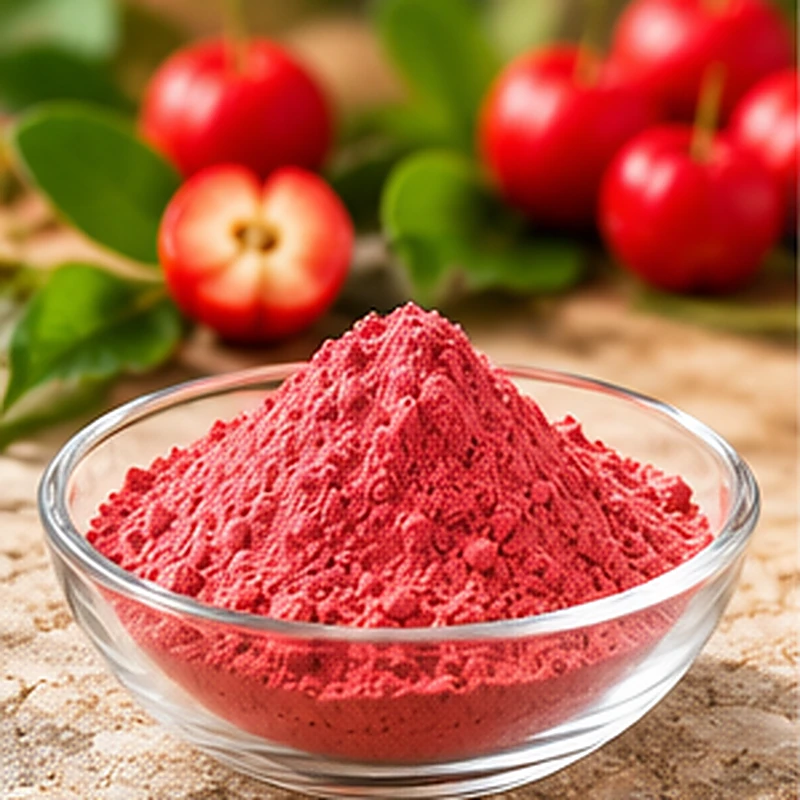
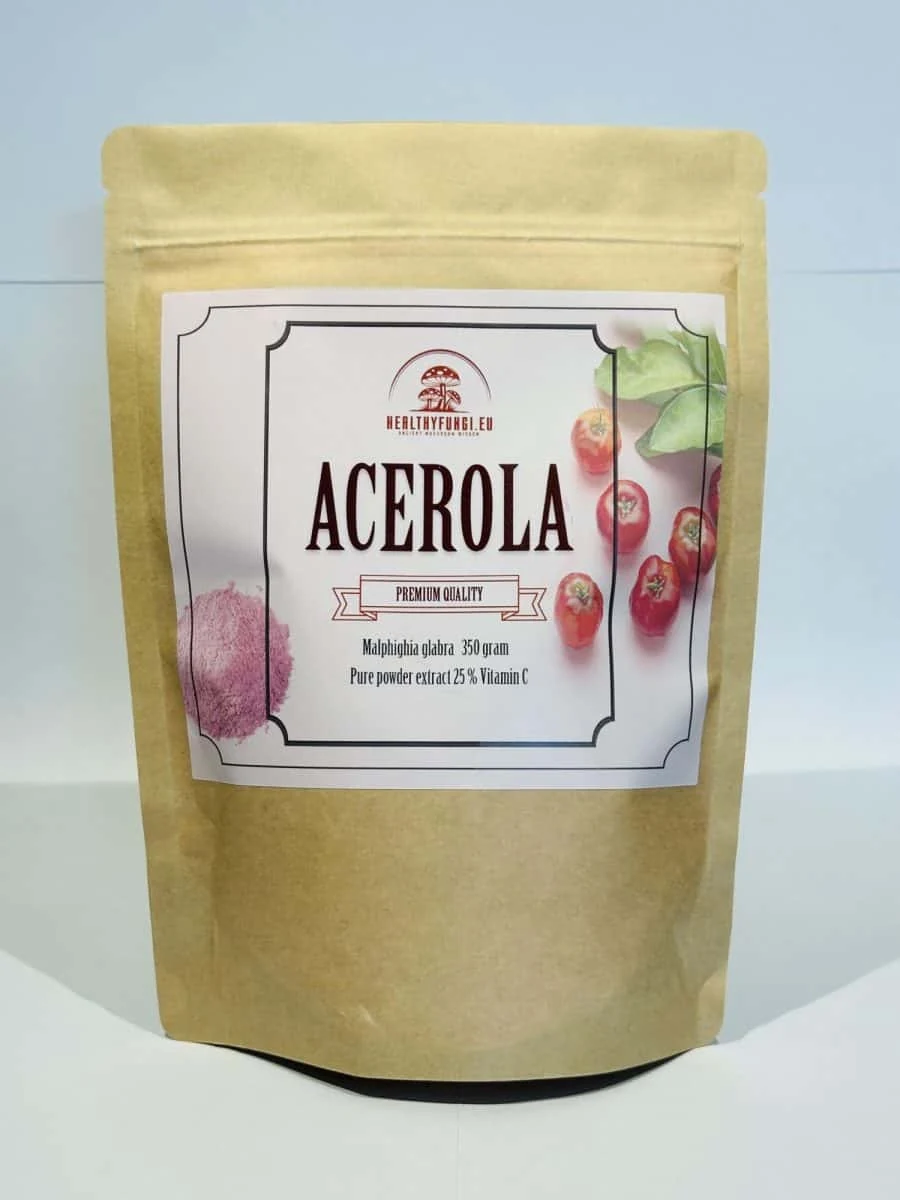
Acerola is not a mushroom but a tropical fruit known for its naturally high vitamin C content. In a standardized extract, the vitamin C concentration is specified, making the composition easier to compare than that of fresh fruit, whose vitamin C content can vary considerably.
Raw materialAcerola fruit
Standardization25% vitamin C
Packaging270 grams of powder
01
Origin and botanical background
Acerola, also known as Barbados cherry, originates from tropical regions of Central America, the Caribbean and northern South America. The plant grows as a shrub or small tree and bears juicy fruits ranging from orange-red to bright red.
At Healthy Fungi, we list Acerola under the botanical name Malpighia glabra. The trade name acerola is also used for Malpighia emarginata. Although these species are closely related, they are distinct botanical species, so accurate identification remains important.
02
Natural constituents
Vitamin C, chemically known as ascorbic acid, is the most characteristic compound in acerola. The fruit also naturally contains plant compounds such as polyphenols, phenolic acids, flavonoids, anthocyanins and carotenoids, including beta-carotene.
Acerola fruits also naturally contain B vitamins, including B1, B2, B3, B5, B6 and folate, vitamin E compounds, and minerals such as potassium, magnesium, calcium, iron, zinc, copper and phosphorus. Vitamin C is the standardized nutrient in our extract; no specific amount of the other substances is guaranteed.
03
From fruit to extract
Acerola can be processed into juice concentrate, fruit powder or a standardized extract. During processing, the fruits are selected, cleaned and turned into a concentrated ingredient; the preparation can then be dried into powder.
Because vitamin C is sensitive to oxygen, light, heat and moisture, careful processing and protection during storage are important. The sensitive nature of ascorbic acid means the drying method and airtight packaging also affect the final vitamin C content.
04
Purity and quality characteristics
Our acerola extract consists of pure fruit extract without added processing aids, preservatives, sugar, or synthetic colors, fragrances or flavorings. The recipe also contains no gluten, soy, lactose or genetically modified ingredients. For specific allergies, the current label and product specifications remain authoritative.
For a standardized extract, botanical identity, measured ascorbic acid content, and testing for microbiological contamination and unwanted residues are important quality indicators. The stated standardization is 25% vitamin C.